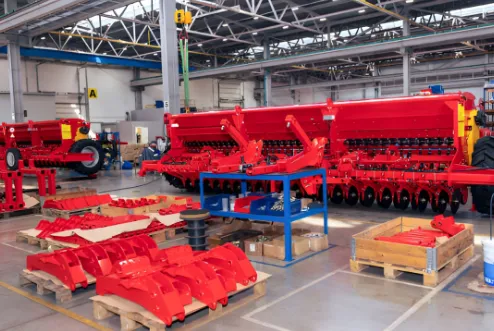

Agriculture has changed significantly as farmers face rising labor costs, unpredictable weather, tighter planting schedules, and increasing pressure to produce more from available land. In this environment, machinery is no longer viewed only as a replacement for manual labor. It has become an important part of farm planning, crop management, productivity, and long-term business growth.
The right equipment can help farmers complete essential tasks faster, improve consistency, reduce unnecessary waste, and manage larger areas with fewer delays. However, these benefits depend on selecting machinery that matches the farm’s actual requirements. Working with a reliable Gengjia Agri agricultural machinery manufacturer can help buyers explore equipment suited to different crops, workloads, field sizes, and operating conditions.
This guide explains how farmers, agricultural contractors, and machinery buyers can make better equipment decisions without focusing only on price, size, or engine power.
Understand the Farm Before Choosing Machinery
Every farm operates under different conditions. Two farms of the same size may require completely different machinery because of crop type, soil condition, terrain, climate, labor availability, and field layout.
Before purchasing equipment, buyers should identify the exact tasks the machine must perform. A practical farm assessment should include:
· Total land area
· Crops grown during each season
· Field width and accessibility
· Soil hardness and moisture
· Flat or sloping terrain
· Available operators
· Peak-season working hours
· Existing equipment and attachments
This assessment helps prevent overbuying or underbuying. A machine that is too small may take too long to finish important seasonal work. A machine that is unnecessarily large may increase fuel consumption, maintenance expenses, and purchase costs without providing enough additional value.
Match Tractor Power With Actual Farm Tasks
Tractors are among the most versatile machines used in agriculture. Farmers may use them for plowing, planting, spraying, mowing, hauling, and operating different attachments.
Horsepower is important, but it should not be the only factor. Buyers should also consider transmission type, hydraulic capacity, lifting power, tire options, maneuverability, and operator comfort.
A compact tractor may be suitable for orchards, greenhouses, small farms, or narrow fields. A larger tractor may be needed for heavy tillage, wider implements, and long working hours on open farmland.
A suitable tractor should:
· Pull required implements without excessive strain
· Operate efficiently at normal working speeds
· Turn safely within available field space
· Provide enough hydraulic power
· Remain comfortable during long shifts
· Consume fuel at a reasonable rate
The best tractor is not always the model with the highest power rating. It is the machine that can complete the required work efficiently and reliably.
Improve Soil Preparation Without Extra Field Passes
Good soil preparation creates suitable conditions for seed placement, root development, water movement, and healthy crop establishment. However, excessive passes across a field can increase fuel use, delay planting, compact the soil, and cause additional machine wear.
Farmers should select tillage equipment according to soil conditions and crop requirements. Heavy equipment may be needed for hard or compacted ground, while lighter tools may be enough for previously cultivated fields.
Reducing unnecessary passes can offer several benefits:
· Lower fuel expenses
· Less soil compaction
· Faster field preparation
· Reduced equipment wear
· Better use of labor
· Timely planting
The goal should be to prepare the soil effectively with the fewest practical operations. Properly matched equipment makes this balance easier to achieve.
Use Planting Equipment to Improve Accuracy
Planting quality has a strong influence on crop development. Uneven depth, incorrect spacing, and irregular seed distribution may cause poor germination and uneven plant growth.
Seeders and planters can improve consistency by placing seed at a controlled depth and distance. The right machine depends on crop type, seed size, row spacing, soil preparation, and desired planting speed.
Useful features may include:
· Adjustable planting depth
· Seed-rate control
· Different row-spacing options
· Suitable hopper capacity
· Easy calibration
· Compatibility with local seed varieties
Accurate planting can reduce seed waste and support more uniform crop emergence. It may also make later activities, including spraying, cultivation, and harvesting, easier to manage.
Operators should calibrate planting equipment before entering the field. Even a suitable machine may produce poor results when its settings are incorrect.
Select Spraying Equipment for Controlled Application
Spraying is an important but sensitive farming activity. Incorrect application can waste chemicals, increase costs, reduce treatment effectiveness, and create uneven crop coverage.
A suitable sprayer should provide consistent distribution and allow the operator to control the application rate. Tank capacity, boom width, nozzle type, pressure control, and field shape should all be considered.
Farmers should regularly inspect:
· Nozzles
· Hoses
· Filters
· Connections
· Spray patterns
· Pressure levels
· Tank cleanliness
Blocked or worn nozzles may apply too much material in one area and too little in another. Regular maintenance and correct calibration help ensure that the intended amount reaches the crop.
Larger fields may benefit from wider working widths, while smaller or irregular fields may require more compact and maneuverable equipment.
Choose Harvesting Machinery With Crop Loss in Mind
Harvesting often needs to be completed within a limited period. Delays may expose crops to rain, wind, pests, over-ripening, or quality loss.
Harvesting capacity should therefore match the total field area and expected crop volume. A combine harvester or specialized harvesting machine should be evaluated according to:
· Crop compatibility
· Cutting width
· Field conditions
· Grain tank capacity
· Adjustment controls
· Fuel consumption
· Cleaning performance
· Expected daily output
A machine that works quickly but causes excessive grain or crop loss is not truly efficient. Correct machine settings are essential, particularly when crop moisture, density, or field conditions change.
Farmers should monitor losses behind the machine and adjust working speed, cutting height, and separation settings when required.
Consider the Needs of Livestock Farms
Livestock farms often require different machinery from grain-producing farms. They may need equipment for cutting, collecting, chopping, transporting, and storing forage.
The right forage machinery depends on:
· Type of forage crop
· Required cutting length
· Number of animals
· Storage method
· Harvesting window
· Transport distance
· Seasonal feed requirements
A machine with insufficient capacity may delay forage collection and reduce quality. A machine that is much larger than required may be expensive to purchase, maintain, and operate.
Buyers should calculate how much forage must be processed during the season and select equipment that can complete the work within the available time.
Understand Where Agricultural Drones Add Value
Agricultural drones are becoming useful for field monitoring, mapping, crop observation, inspection, and certain spraying activities. Their suitability depends on the model, intended use, farm conditions, and local regulations.
Drones may help farmers identify:
· Uneven crop growth
· Waterlogged areas
· Dry sections
· Pest damage
· Missing plants
· Difficult-to-reach locations
Before buying a drone, farmers should consider flight time, payload capacity, battery requirements, software, operator training, and local operating rules.
Drone technology should support farm decisions rather than replace practical field knowledge. The information collected from the air must still be compared with actual conditions on the ground.
Compare the Total Cost of Ownership
A low purchase price does not always mean that a machine will be economical to own. Machinery costs continue after the initial payment and may include fuel, servicing, repairs, storage, replacement parts, and operator training.
A practical cost comparison should include:
· Initial purchase price
· Expected working life
· Annual operating hours
· Fuel consumption
· Service requirements
· Parts availability
· Repair expenses
· Resale value
· Possible productivity gains
Buyers should also consider how frequently the machine will be used. Renting or sharing equipment may be suitable for occasional work. Ownership may be more practical when machinery is required regularly and must be available at short notice.
Calculating cost per hour or cost per acre can make different equipment options easier to compare.
Review Parts and After-Sales Support
Agricultural machinery can lose much of its value if spare parts are difficult to obtain or technical support is unavailable. Buyers should examine the supplier’s ability to provide clear specifications, maintenance guidance, warranty information, and replacement components.
Before placing an order, buyers should ask about:
· Standard and optional features
· Included attachments
· Recommended spare parts
· Warranty terms
· Technical manuals
· Operator guidance
· Delivery schedules
· Packaging and shipping
· After-sales assistance
International buyers should also confirm documents, destination requirements, machine configuration, and shipping arrangements before the order is finalized.
Clear communication reduces the possibility of receiving equipment that does not match the buyer’s intended application.
Inspect Technical Specifications Carefully
Product photographs can provide a basic visual understanding, but they are not enough for an important machinery purchase. Buyers should request complete technical specifications and compare them with their farm requirements.
Important details may include:
· Machine dimensions and weight
· Engine output
· Working width
· Hydraulic and lifting capacity
· Tire or track options
· Attachment compatibility
· Fuel tank capacity
· Safety systems
· Electrical requirements
· Transport dimensions
A Gengjia Agri agricultural machinery manufacturer can provide relevant equipment information to help buyers evaluate available machinery before confirming an order.
This step is particularly important for distributors and agricultural businesses purchasing multiple machines. A small specification mistake may affect every unit included in the shipment.
Protect Machinery Through Regular Maintenance
Regular maintenance helps agricultural machinery remain dependable during busy working seasons. Preventive servicing is generally less expensive than emergency repairs after a serious breakdown.
A basic maintenance routine should include:
· Checking engine oil and coolant
· Cleaning filters and radiators
· Inspecting chains, belts, and hoses
· Lubricating moving components
· Monitoring tire pressure
· Tightening loose fasteners
· Replacing worn parts
· Cleaning machinery after use
· Storing equipment under cover
Operators should keep records of service dates, repairs, and replacement parts. These records can reveal repeated problems and help owners plan future maintenance.
The client website, gengjiaagri.com, presents agricultural machinery options for farmers, distributors, contractors, and other buyers seeking equipment for different agricultural operations.
Final Thoughts
Agricultural machinery can support long-term farm growth when it is selected carefully. The most suitable machine is not automatically the largest, most powerful, or most expensive option. It is the equipment that matches the farm’s crops, land, workload, budget, and operating environment.
By reviewing technical specifications, ownership costs, maintenance requirements, spare-parts availability, and supplier support, buyers can make more informed decisions. Well-matched machinery can reduce delays, ease labor pressure, improve field consistency, and provide reliable service across many farming seasons.

Olivia Bennett is a creative content writer at SmartResponces, specializing in witty replies, thoughtful responses, and modern communication tips. She helps readers navigate everyday conversations with ease—whether it’s replying to texts, handling awkward situations, or adding humor to their interactions.
With a passion for digital communication, social trends, and relatable storytelling, Olivia creates content that is both engaging and practical. Her work covers topics like funny comebacks, relationship communication, texting etiquette, and confidence-boosting replies designed for real-life use.
Olivia’s writing style is friendly, conversational, and easy to follow, making her content accessible to a wide audience. She believes that the right words can make any conversation smoother and more memorable, and she aims to help readers express themselves clearly and confidently.






Leave a Comment