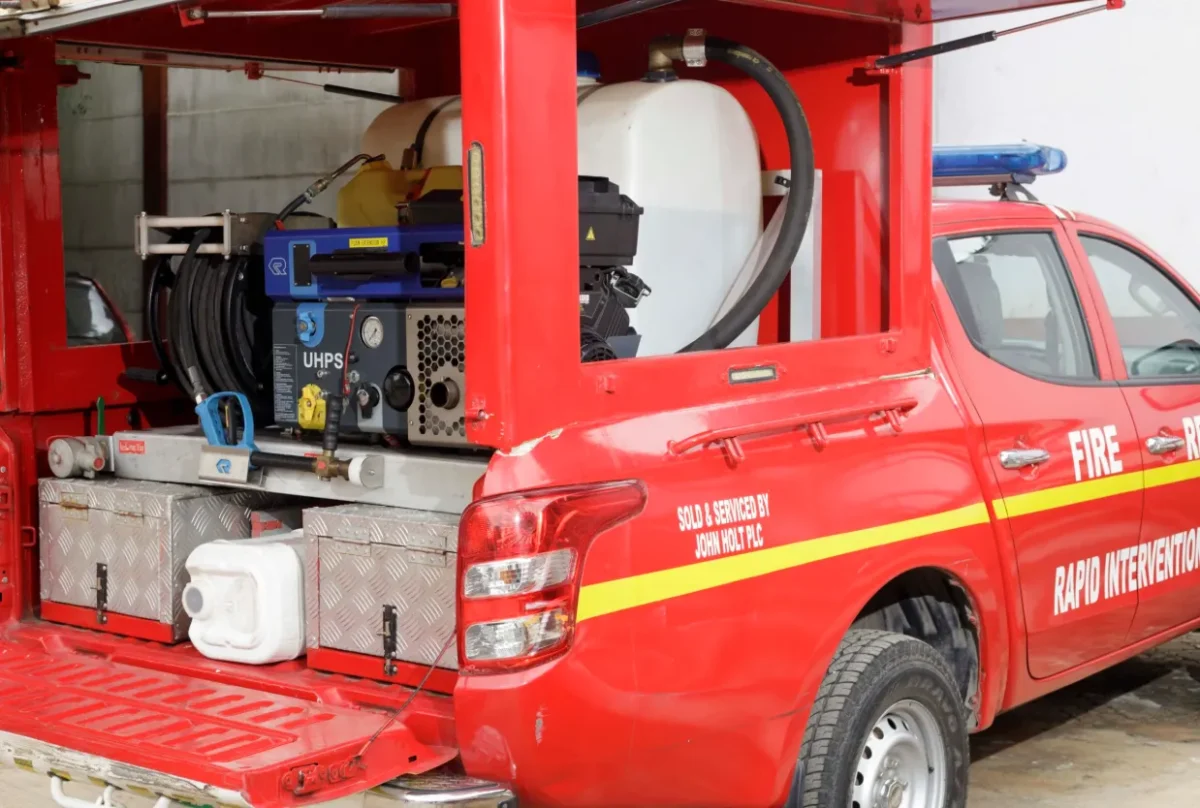

In fire response, the first five minutes are everything. Studies from the Australasian Fire and Emergency Service Authorities Council show that a fire not controlled within the first ten minutes has a 70% higher chance of spreading to a critical size. The equipment you deploy in those early minutes determines the outcome. A compact slip on fire unit gives responders immediate attack capability without waiting for a heavy tanker. It sits on any light vehicle. It is ready in under 90 seconds. For rural landholders, road crews, and industrial sites, this is not a luxury piece of equipment. It is a frontline tool.
What Makes a Slip-On Unit Different from a Standard Fire Rig?
The difference is deployment speed and vehicle flexibility. A standard fire tanker is a dedicated vehicle. It takes time to mobilise, requires a trained driver, and cannot access all terrain. A slip-on unit mounts directly onto a standard ute tray or flat-deck trailer using standard tie-down points. You can move it between vehicles in under an hour. The unit brings its own water tank, pump, hose reel, and nozzle as a self-contained system. There is no external water source dependency for initial attack. That self-sufficiency is exactly what first response requires.
How Quickly Can a Compact Unit Deploy in a Real Scenario?
A well-maintained compact slip-on unit with a pre-primed pump can be discharging water within 90 seconds of the vehicle stopping. Compare that to a heavy tanker, which requires setup time, positioning, and often a two-person crew to operate safely. In grassfire conditions where fire moves at up to 25 kilometres per hour, every second is meaningful. The compact unit lets one operator drive to the fire edge, exit, and begin suppression without assistance. That single-operator capability is critical in rural settings where crew numbers are often limited.
What Tank Capacity Is Right for a Compact Unit?
Compact slip-on units typically range from 200 to 500 litres. At 200 litres with a 100 litres-per-minute pump output, you have two minutes of continuous discharge. That sounds short. In practice, trained operators do not discharge continuously. They use short, controlled bursts to suppress spot fires and cool hotspots. Two minutes of water applied correctly can control a fire that would otherwise take an hour to mop up. For extended operations, units with refillable capability via a suction hose from a static water source extend operational time indefinitely.
What Pump Specifications Actually Matter for Emergency Response?
Flow rate and pressure are the two numbers that count. For initial fire attack, you want a minimum of 60 litres per minute at 700 kPa. This produces a jet stream with enough reach and penetration to hit the base of a flame from a safe distance. A high-pressure, low-volume setting gives you a tight 15-metre stream. A high-volume setting gives broader coverage for mop-up. The best compact units offer a variable nozzle that switches between both in seconds. Pump type matters too. A petrol-driven centrifugal pump is the standard for slip-on units because it self-primes and maintains consistent pressure even as tank volume drops.
How Does a Compact Unit Perform in Rugged Terrain?
This is where compact units outperform larger rigs decisively. A 300-litre slip-on unit adds approximately 350 kilograms to the vehicle load. A ute rated to 1,000 kilograms payload carries this comfortably and retains its off-road capability. The low profile of a compact unit means it does not compromise ground clearance or overturn risk on slopes. Heavy tankers often cannot access steep terrain, narrow tracks, or soft ground. Compact units go where the fire is, which is the only place that matters.
What Maintenance Does a Compact Unit Need to Stay Emergency-Ready?
More than most owners give it. After every use, flush the pump and hose with clean water. Diesel and debris block nozzles. Check the pump impeller and seal monthly during fire season. Run the pump dry for 30 seconds every two weeks even when unused, to circulate oil and prevent seal seizing. Test the hose reel for kinks and the nozzle for correct operation before fire season every year. Units that fail in an emergency almost always failed because of a missed check. A 20-minute monthly inspection keeps a compact unit ready for the real call.

Olivia Bennett is a creative content writer at SmartResponces, specializing in witty replies, thoughtful responses, and modern communication tips. She helps readers navigate everyday conversations with ease—whether it’s replying to texts, handling awkward situations, or adding humor to their interactions.
With a passion for digital communication, social trends, and relatable storytelling, Olivia creates content that is both engaging and practical. Her work covers topics like funny comebacks, relationship communication, texting etiquette, and confidence-boosting replies designed for real-life use.
Olivia’s writing style is friendly, conversational, and easy to follow, making her content accessible to a wide audience. She believes that the right words can make any conversation smoother and more memorable, and she aims to help readers express themselves clearly and confidently.




Leave a Comment