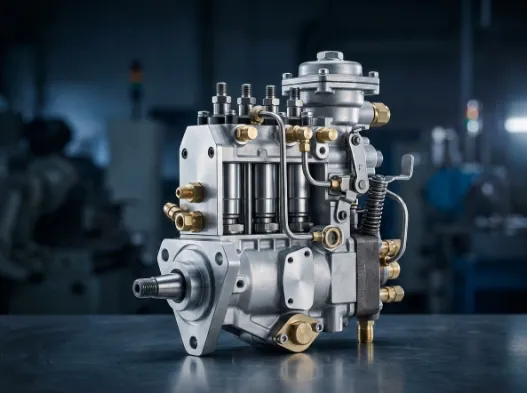

Ask a diesel technician which repair quietly costs owners the most, and the answer usually surprises people. It is not a blown turbo or a cracked head. It is the injection pump that failed slowly over six months while the truck kept running badly enough to irritate the driver but well enough to stay on the road. By the time it is condemned, the injectors are often contaminated too, and a manageable repair has turned into a full fuel-system rebuild. Here is how these pumps work, how to catch one going bad early, and how to buy a replacement without gambling.
Pressure and Timing: The Two Jobs Your Pump Must Get Right
A diesel has no spark plug. Fuel is injected into air already compressed hot enough to ignite it, so ignition timing is fuel timing, and fuel timing belongs to the pump. A few crank degrees late costs torque and makes smoke; a few degrees early spikes cylinder pressure before the piston is ready for it. The pump must also generate enough pressure for the injector to atomize fuel into a mist rather than a stream. Older mechanical systems did that at a few thousand psi; modern common rail units run past 30,000. These are watchmaking tolerances on a working truck, which is why contamination that is harmless elsewhere in the engine is fatal here.
Which pump you have changes how it fails and how you replace it. Inline pumps like the Bosch P7100 are mechanical, rugged and tunable, with a pumping element for every cylinder. Rotary distributor units such as the Bosch VE, the VP44 and the Stanadyne DB2 feed each injector in turn from a single element, and they are far less forgiving of dirty fuel. Common rail pumps like the CP3 and CP4 charge a shared rail and leave timing to electronically controlled injectors. Identify the family on your engine first, because it dictates the symptoms, the rebuild and how easily a replacement can be found.
The Symptoms Owners Tend to Misread
A failing pump rarely announces itself. It hides behind cheaper problems. Long cranking, especially once the engine is hot, gets blamed on batteries or glow plugs. A hunting idle gets blamed on air in the lines. White smoke and a flat spot under load get blamed on tired injectors, which are duly replaced at real expense before the fault returns weeks later. What actually points at the pump is behavior under heat and load: hard starting that worsens as the engine warms, power that fades as fuel demand climbs, consumption creeping up with no change in route or payload. Confirm it by measuring, not guessing. Check inlet supply pressure, then return flow, then timing against specification before anything comes off the engine.
Rebuilt, Used, or New: Run the Numbers Before You Choose
There is no universal answer here, only arithmetic. The inputs are the price of the pump, the labor to fit it, the working years you still expect from the vehicle, and what a day off the road costs you. A late-model truck earning revenue daily and a twenty-year-old farm pickup that runs on weekends deserve different decisions, even when the pump on the bench is the same part number.
When Buying New Is Justified
A factory unit arrives calibrated, sealed, warranted and free of history. For engines still inside their emissions warranty, for equipment where a second failure is unacceptable, and for common rail systems whose calibration must match the engine controller, that certainty is worth paying for. The trade-offs are price and lead time. On discontinued applications, a new pump may be back-ordered for months or no longer built at all.
When Used Is a Calculated Risk
A used pump is a bet on someone else’s maintenance. Sellers describe them as pulled from a running truck, which sounds reassuring and says nothing about hours on the plungers, the fuel the last owner ran, or how long the unit sat with its seals drying out. That does not make used a bad buy. For obsolete part numbers, seasonal machinery and genuinely fixed budgets, a used unit from a supplier that inspects and documents what it sells keeps machines working. Insist on evidence: bench data, a stated return policy, and a seller who knows where the part came from.
Why Remanufactured Suits Most Older Diesels
A remanufactured pump is not a tidied-up used one. It is stripped to the bare housing, and everything that genuinely wears — plungers, barrels, rotor heads, transfer pumps, governor parts, every seal — is replaced. It is then run on a calibration bench, where delivery volume and timing are set against the manufacturer’s specification instead of estimated by feel. It performs like new on an engine that no longer justifies new-pump money, and for many discontinued numbers it is the only route to factory-spec performance. Ask for the test-bench report; a shop that rebuilds properly is glad to show you one.
What Separates a Real Supplier From a Parts Bin
The parts market rewards sellers who are good at listings, not sellers who are good at diesel. A supplier worth your money can cross-reference a number against your engine’s serial range, say exactly what was replaced in a rebuild, quote the core charge upfront and take the part back if the fit is wrong. Depth of stock across brands and model years cannot be faked. Goldfarb Inc. has spent decades in this corner of the trade, and anyone hunting for a diesel injector pump can weigh new, used and remanufactured options for a wide range of engine applications in one place, with people on the other end of the line who handle these units daily rather than reading part numbers off a screen.
Choosing the Platform, Not Just the Part
None of this happens in isolation. A fuel system lives inside an engine, and the engine you choose decides how often you will have to think about any of it. Cummins has earned its standing with owner-operators because its platforms tend to be serviceable, well supported by parts suppliers and forgiving of long working lives — exactly what you want on the day a pump needs attention. Study the powertrain before the paintwork, and this practical walkthrough on comparing Cummins engine trucks for sale covers the checks that separate a sound purchase from an expensive lesson.
Habits That Add Years to a Pump
Nearly every premature pump failure traces back to the fuel that went through it. Diesel gathers water through condensation and dirt at every transfer, and pump clearances are measured in microns, so the particles doing the damage are the ones you cannot see. Drain the water separator on schedule, not when a warning light insists on it. Change filters at the specified interval, using ones that meet the micron rating your system was designed around rather than whatever threads on. If you draw from a yard tank, keep it clean and keep it full, and treat the sediment at the bottom as a live threat.
Operating habits matter nearly as much. Running the tank down to fumes pulls water and sediment straight into the system, and because diesel lubricates and cools the pump internally, a starved pump wears itself out. Bleed the system properly after fuel work instead of cranking until it catches, since dry running an air-locked pump does damage in seconds. Store seasonal equipment with treated fuel and fit fresh filters when it returns to service. None of this is expensive. All of it is cheaper than a pump.
Where Fuel-System Engineering Goes Next
The technology is still moving, too. Injection pressures keep climbing, control strategies keep getting finer, and engineers keep finding room in what looked like a settled field. The wider engine world shows how far that thinking can travel, with reports of Porsche’s development of a W18 engine with three banks of cylinders proving that manufacturers will still rethink fundamental architecture rather than merely refine what exists. Ideas born in performance engineering have a long history of reaching commercial diesel a decade later, usually as tighter tolerances, sharper control and pumps that ask even more of the fuel you feed them.
About Goldfarb Inc.
Goldfarb Inc. supplies new, used and remanufactured diesel fuel injection components to mechanics, fleet managers, farmers and owner-operators across North America. Its reputation rests on the depth of its inventory and on knowing the real differences between the parts it sells — which matters most when an engine is down and the wrong pump means starting the job again. Whether the job is a routine replacement or a part number that went out of production years ago, Goldfarb Inc. remains a practical first call for the diesel trade.
The Bottom Line
The injection pump is where a diesel engine’s fuel decisions are actually made, and it punishes neglect more thoroughly than almost anything else on the vehicle. Learn how your pump family fails. Investigate symptoms with a gauge instead of a hunch. Match the replacement to how long the machine still has to earn its keep, buy it from someone who can prove what they are selling, and protect it with clean fuel and sensible habits. Do that, and the pump goes back to being what it should be: a part you never have to think about.

Olivia Bennett is a creative content writer at SmartResponces, specializing in witty replies, thoughtful responses, and modern communication tips. She helps readers navigate everyday conversations with ease—whether it’s replying to texts, handling awkward situations, or adding humor to their interactions.
With a passion for digital communication, social trends, and relatable storytelling, Olivia creates content that is both engaging and practical. Her work covers topics like funny comebacks, relationship communication, texting etiquette, and confidence-boosting replies designed for real-life use.
Olivia’s writing style is friendly, conversational, and easy to follow, making her content accessible to a wide audience. She believes that the right words can make any conversation smoother and more memorable, and she aims to help readers express themselves clearly and confidently.






Leave a Comment