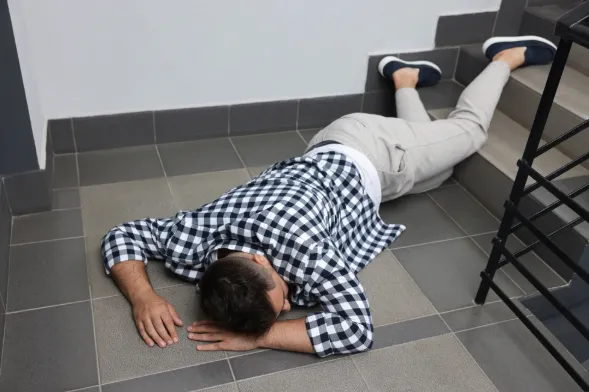

Slip and fall accidents can lead to serious injuries that affect a person’s health, work, and daily activities.
When the injuries are severe, many people assume that responsibility for the accident will be obvious. In reality, determining liability is often more complicated than it appears. Investigators usually need to examine the condition of the property, the events leading up to the fall, and the available evidence before reaching conclusions. Even in cases involving significant injuries, questions may remain about how the accident happened.
A slip and fall accident attorney often reviews these same factors when evaluating the circumstances surrounding a property-related injury.
The Injury May Be Clear, but the Cause Often Is Not
A serious injury can be easy to identify. Broken bones, head injuries, and other medical conditions may be documented shortly after the accident.
However, the injury itself does not explain why the fall occurred. Investigators must determine whether a hazardous condition existed and whether that condition contributed to the incident.
For this reason, the focus often shifts away from the injury and toward understanding what happened before the fall. Establishing the cause of the accident is frequently one of the most important parts of the investigation.
Reconstructing the Minutes Before the Fall
Understanding the events that occurred before the accident can help investigators build a clearer picture of what happened.
Rather than examining only the moment of impact, investigators often review the environment, activities, and conditions leading up to the incident.
Key Details Often Reviewed
- Walking path
- Surface conditions
- Lighting conditions
- Foot traffic in the area
- Recent maintenance activity
These details may help explain whether a hazardous condition existed and how it may have contributed to the fall.
The Challenge of Hazards That Do Not Last Long
Many slip and fall accidents involve temporary hazards. A spill may be cleaned up, a warning sign may be moved, or an object may be removed shortly after the incident occurs.
Because these conditions can disappear quickly, investigators may not have an opportunity to view the hazard exactly as it existed at the time of the accident.
This creates challenges when attempting to determine what caused the fall. Photographs, surveillance footage, and witness observations may become important because they help preserve information that would otherwise be lost.
The changing nature of temporary hazards is one reason liability can become difficult to establish.
When Property Control Becomes Part of the Investigation
People often assume that the property owner is the only party examined after a slip and fall accident. However, responsibility for maintaining a property is not always limited to one person or business.
Investigators frequently review who controlled the area where the accident occurred and who was responsible for maintaining safe conditions.
Parties That May Be Examined
- Property owners
- Management companies
- Business operators
- Maintenance providers
- Contractors working on-site
Each party may have different responsibilities related to inspections, repairs, or property maintenance. Understanding these roles can be an important part of determining liability.
Why Documentation Sometimes Tells an Incomplete Story
Documentation often plays a major role in accident investigations. Incident reports, maintenance logs, inspection records, and photographs can provide valuable information.
However, records do not always answer every question. Some documents may contain limited information, while others may not fully describe the conditions present at the time of the accident.
Because of this, investigators frequently seek additional sources of information. Documentation is useful, but it is often only one piece of a much larger investigation.
Witnesses, Cameras, and Conflicting Accounts
Witnesses can provide important observations about a slip and fall accident. At the same time, different people may remember events differently.
One witness may focus on the condition of the floor, while another may notice activity occurring nearby. These differences can create conflicting accounts of the same incident.
Surveillance footage may provide additional context, but video recordings do not always capture every angle or detail. As a result, investigators often compare witness statements, camera footage, and other records to identify consistencies and resolve discrepancies.
This process helps create a more complete understanding of the accident.
Looking Beyond the Moment of Impact
A slip and fall investigation often extends beyond the accident itself. Investigators may examine broader property conditions and safety practices to better understand the circumstances surrounding the incident.
Maintenance procedures, inspection routines, and previous concerns about property conditions may all become relevant. These issues are commonly associated with premises liability investigations because they help explain how hazards develop and whether they could have been addressed earlier.
Looking beyond the immediate injury can provide valuable context when evaluating liability.
Conclusion
Liability decisions are rarely based on a single piece of information. Instead, investigators typically review all available evidence before drawing conclusions.
Property conditions, witness accounts, documentation, surveillance footage, and maintenance records often work together to tell the story of what happened. Even small details can influence the overall understanding of the incident.
For individuals consulting a slip and fall accident attorney, it is often surprising to learn how many factors may affect a liability investigation. Serious injuries alone do not automatically establish responsibility. Determining liability usually requires a careful review of the facts, evidence, and circumstances surrounding the accident. By examining the complete picture, investigators can better understand why some high-injury slip and fall accidents involve more questions than expected.

Olivia Bennett is a creative content writer at SmartResponces, specializing in witty replies, thoughtful responses, and modern communication tips. She helps readers navigate everyday conversations with ease—whether it’s replying to texts, handling awkward situations, or adding humor to their interactions.
With a passion for digital communication, social trends, and relatable storytelling, Olivia creates content that is both engaging and practical. Her work covers topics like funny comebacks, relationship communication, texting etiquette, and confidence-boosting replies designed for real-life use.
Olivia’s writing style is friendly, conversational, and easy to follow, making her content accessible to a wide audience. She believes that the right words can make any conversation smoother and more memorable, and she aims to help readers express themselves clearly and confidently.






Leave a Comment