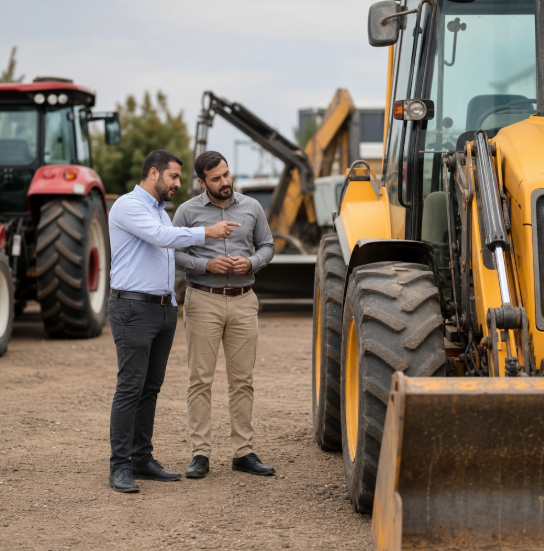

Whether you manage a working farm, run a landscaping business, or oversee construction projects, the equipment you rely on directly determines your productivity and profitability. Purchasing machinery is one of the largest capital decisions any operator will make, and the choice between new and used equipment carries significant financial and operational consequences. For many buyers, the used equipment market offers a compelling path to acquiring high-quality, dependable machines at a fraction of the cost of new units. But navigating that market wisely requires knowledge, patience, and a clear understanding of what to look for before signing any paperwork.
Why the Used Equipment Market Deserves Serious Consideration
There is a persistent misconception that used machinery is inherently risky or inferior. In reality, well-maintained equipment from reputable dealers can deliver years of reliable service at a dramatically lower acquisition cost. Depreciation hits hardest in the first few years of a machine’s life, meaning a buyer who purchases a two- or three-year-old unit often gets most of the useful life of the machine while avoiding the steepest portion of the depreciation curve. This is particularly relevant for agricultural and construction equipment, where machines are built to last decades when properly serviced.
The savings realized from purchasing used equipment can be reinvested into other areas of the operation — additional attachments, improved storage facilities, staff training, or simply maintaining a healthier cash flow buffer during slower seasons. For small and mid-sized operations especially, this financial flexibility can be the difference between growth and stagnation.
Evaluating Equipment Before You Buy
Mechanical Condition and Service History
Before committing to any used machine, a thorough mechanical inspection is non-negotiable. This means reviewing service records, checking for signs of excessive wear on key components, and ideally having an independent mechanic or technician assess the unit. For tractors and heavy construction equipment, pay close attention to engine hours, hydraulic system integrity, transmission condition, and the state of wear items like tires, tracks, and cutting edges. A machine with high hours but a meticulous service history can be a far better investment than a low-hour unit that has been neglected.
Matching Equipment to Your Operational Needs
One of the most common mistakes buyers make is purchasing equipment based on price alone without carefully assessing whether the machine is genuinely suited to their specific tasks. A compact utility tractor that works well for a small hobby farm may be completely inadequate for large-scale row crop production. Similarly, a mid-sized skid steer might handle light landscaping work but struggle under the demands of a busy construction site. Take time to map out your actual workload requirements — the acreage you cover, the materials you handle, the terrain you operate on — and use those parameters to guide your selection rather than letting price be the primary driver.
Understanding how to align machinery choices with long-term operational goals is a discipline in itself. Choosing the right agricultural machinery for sustainable farm growth involves looking beyond immediate needs and considering how your equipment will perform as your operation scales, diversifies, or faces changing seasonal demands.
The Importance of Buying from a Trusted Dealer
The source of your used equipment matters enormously. Purchasing from a private seller can sometimes yield a good deal, but it also comes with considerably more risk — limited recourse if problems emerge, no warranty coverage, and often incomplete documentation. Working with an established dealer who specializes in agricultural, construction, and landscaping machinery provides a layer of accountability and transparency that private sales simply cannot match.
Reputable dealers typically inspect and recondition their inventory before listing it for sale, provide accurate descriptions of each machine’s condition, and stand behind their sales with at least some form of post-purchase support. They also tend to carry a broader selection, allowing buyers to compare multiple options side by side rather than chasing individual listings across different platforms.
H&R Agri-Power: A Reliable Source for Quality Used Machinery
For buyers across the agricultural, construction, and landscaping sectors, H&R Agri-Power has built a strong reputation as a dependable source for quality pre-owned machinery. With a wide-ranging inventory and a team of knowledgeable staff, they make the process of finding the right machine considerably more straightforward. Used construction, agricultural and landscaping equipment available through H&R Agri-Power spans a broad range of categories and price points, giving buyers the flexibility to find machines that genuinely fit their operational requirements and budget constraints.
Their approach combines dealer-level expertise with a customer-focused sales process, ensuring that buyers receive honest guidance rather than simply being pushed toward the highest-margin unit on the lot. For operators who want confidence in their purchase without the uncertainty that often accompanies the used equipment market, working with a dealer of this caliber is a sound strategy.
Safety Considerations When Operating Used Equipment
Acquiring used machinery also brings with it a responsibility to ensure that safety systems are fully functional and that operators are properly trained. Older machines may predate certain modern safety features, and components like rollover protection structures, seat belts, and PTO guards should be inspected carefully before the machine enters service. Any safety-critical component that is damaged, missing, or non-compliant should be repaired or replaced before operation begins.
Tractor operation in particular carries significant risk if proper precautions are not observed. Reviewing established tractor safety precautions for agricultural and construction environments is an essential step for any operator, whether they are experienced or new to working with heavy machinery. Safety compliance is not just a regulatory requirement — it is a fundamental part of responsible equipment ownership.
Financing and Total Cost of Ownership
When evaluating the true cost of a used equipment purchase, the sticker price is only one component. Buyers should also factor in anticipated maintenance costs, the availability and pricing of replacement parts, fuel consumption, insurance, and any reconditioning work that may be needed before the machine is fully operational. A thorough total cost of ownership analysis often reveals that a slightly higher-priced unit in better condition is the more economical choice over a multi-year ownership period compared to a cheaper machine that requires immediate or frequent repairs.
Many dealers also offer financing options that can make higher-quality used equipment more accessible without straining working capital. Exploring these options early in the buying process gives you a clearer picture of what is realistically within reach and allows you to negotiate from a position of financial clarity.
Conclusion
The used equipment market, when approached with diligence and the right guidance, offers exceptional value for agricultural producers, construction operators, and landscaping professionals alike. Success in this market comes down to thorough evaluation, a clear understanding of your operational requirements, a commitment to safety, and the wisdom to work with dealers who prioritize transparency and quality. By combining these principles, buyers can acquire machinery that delivers genuine long-term value and supports the continued growth of their operations.

Olivia Bennett is a creative content writer at SmartResponces, specializing in witty replies, thoughtful responses, and modern communication tips. She helps readers navigate everyday conversations with ease—whether it’s replying to texts, handling awkward situations, or adding humor to their interactions.
With a passion for digital communication, social trends, and relatable storytelling, Olivia creates content that is both engaging and practical. Her work covers topics like funny comebacks, relationship communication, texting etiquette, and confidence-boosting replies designed for real-life use.
Olivia’s writing style is friendly, conversational, and easy to follow, making her content accessible to a wide audience. She believes that the right words can make any conversation smoother and more memorable, and she aims to help readers express themselves clearly and confidently.





Leave a Comment